EN
EN
Perfect Feng Shui House Layout - Key Rules & Tips


 3.8
Votes: 8
(Rated: )
3.8
Votes: 8
(Rated: )
Finding harmony within your home is essential for overall well-being. One way to achieve this is to incorporate the ancient practice of Feng Shui into your home design.
Feng shui originated in China 6,000 years ago, but it has become common even far beyond Asia. This practice explains how the placement of objects can affect the energy flow in your space. According to it, your surroundings affect your level of material comfort, your relationships, and success. Using Feng Shui when planning furniture placement and room organization will positively affect your physical and mental health. Plus, the space will be aesthetically pleasing.
In this article, we’ll explore some basic rules, design ideas, and tips to help you create an ideal house layout. You'll also learn how to use an easy-to-use program to plan your entire interior according to Feng Shui. See how to let positive Qi energy flow through every room!
Feng Shui House Layout Rules for Your Home
Below you will find the general Feng Shui guidelines for your interior. Follow them to bring a sense of harmony, aesthetics, and balance to your home organization and your life.
 Declutter your space of unnecessary things so that positive energy can circulate freely.
Maximize the use of natural light in your home to create a warm and inviting ambiance.
Avoid using overly bright or stimulating colors, as they can create an imbalanced energy.
Bring a touch of nature into your home with plants and Ikebana flower arrangements to symbolize growth and abundance. A well-placed shrub near your entrance or in your garden can also invite positive energy.
Use mirrors and glass elements to increase positive energy by reflecting beautiful views. Avoid placing them directly across from the bed and couch or reflecting cluttered spaces.
Place your bed, desk, and stove in the commanding position, which is farthest from the door yet not facing it.
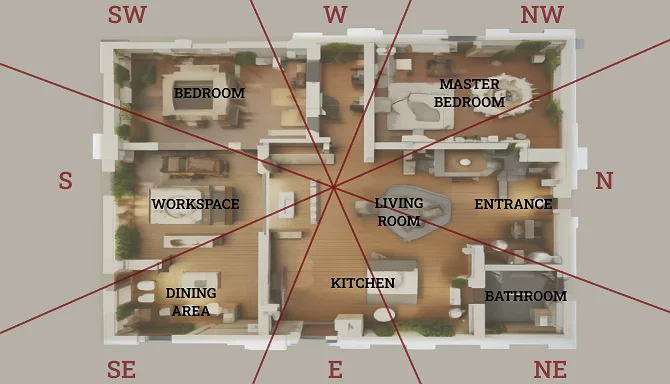
Step up your interior with these ancient principles
Feng Shui House Layout Tips for Each Room
Each space in your home holds the potential to radiate positive energy and create a harmonious environment to live in. Here is a Feng Shui home layout guide to help you unlock the full potential of every room:
Front Door & Foyer Goals
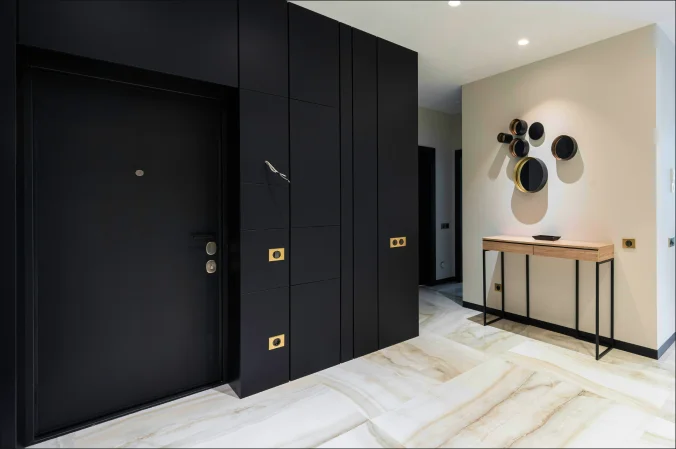
The front door is the gateway for positive energy. So keep your entry area well-lit, clutter-free, and inviting for a good house Feng Shui. Avoid placing sharp objects or obstacles near the entrance, as front door obstruction prevents prosperity energy intake and limits financial growth and opportunity recognition. There must be an easy-to-follow sidewalk around your house and paths from the street to the front door.
Kitchen Feng Shui Rules
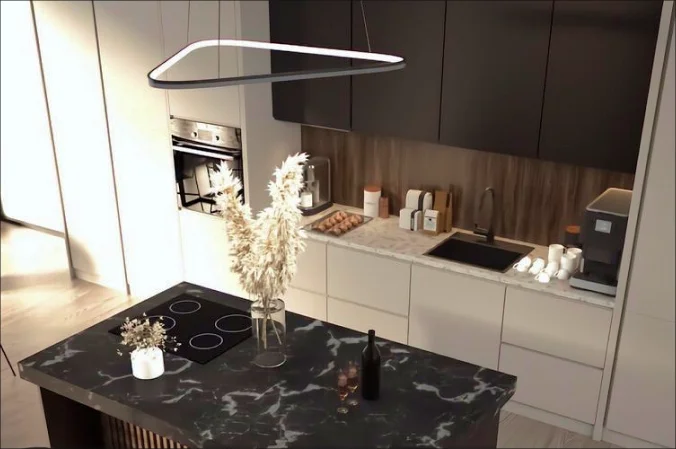
The kitchen is the central hub of the home, where we nourish ourselves. So the stove should be in a commanding position with a clear view of the entire room. To promote healthy Chi, this area should be kept organized, clean, and well away from the entrance. Otherwise, clutter accumulation might block chi pathways and create specific life area problems.
Bedroom Feng Shui Tips
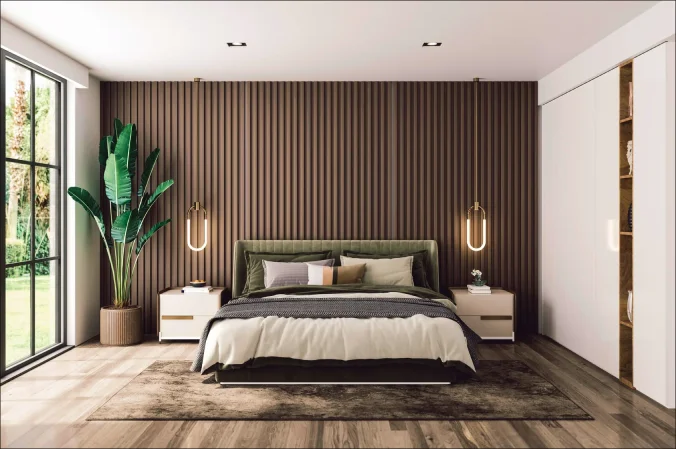
The bedroom is a crucial space for rest and rejuvenation. To create a peaceful Feng Shui bedroom layout, place the room farthest from the main entrance. Avoid busy areas and placing the bed directly opposite a door or mirror, as these can disrupt good energy flow. For restful sleep, you can also place jade in the bedroom.
Living Room Design Tricks
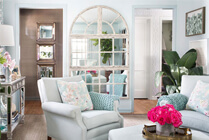
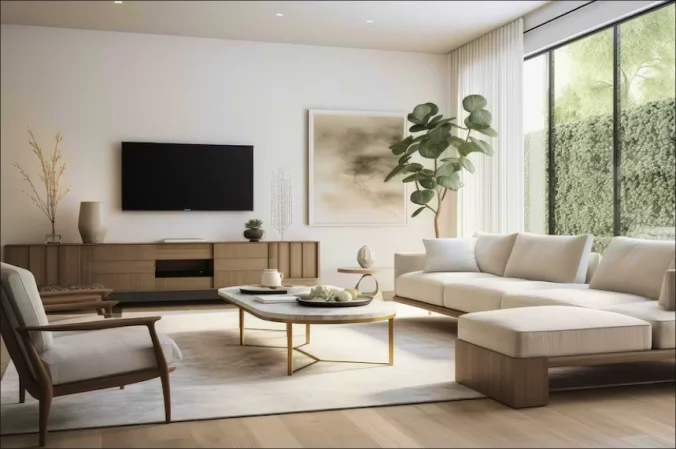
The living room is normally the center of the home and epicenter of family activity. Arrange furniture to encourage conversation and interaction. There should be enough space for the gatherings of your family and friends. Use a combination of natural and soft lighting to create a balanced and inviting atmosphere.
Bathroom Recommendations
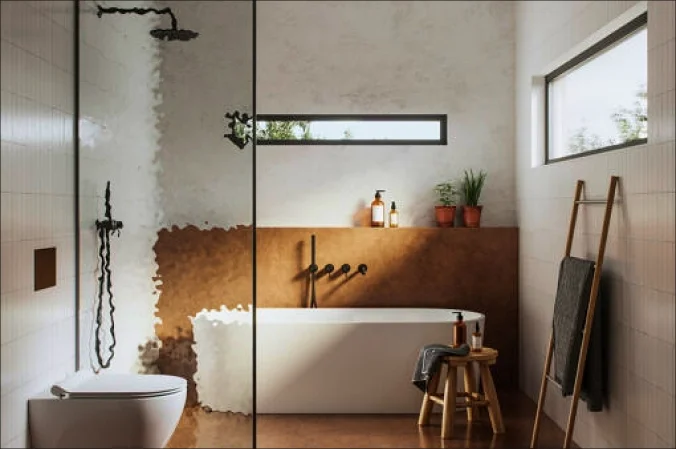
The bathroom represents the water element, which is associated with wealth and wisdom. To balance this element, decorate with wooden and metal objects and plants. Keep the toilet lid closed when not in use to avoid energy loss. Use soft, muted colors to set an auspicious atmosphere.
Workspace Layout Rules
A home workspace should be a place for focus and productivity. So consider placing your desk in a power position with a clear view of the room and the door to feel more in control. It’s believed that command position absence reduces psychological safety and increases stress and anxiety. Incorporate elements that inspire creativity and motivation like artwork or plants.

Staircase Feng Shui Ideas
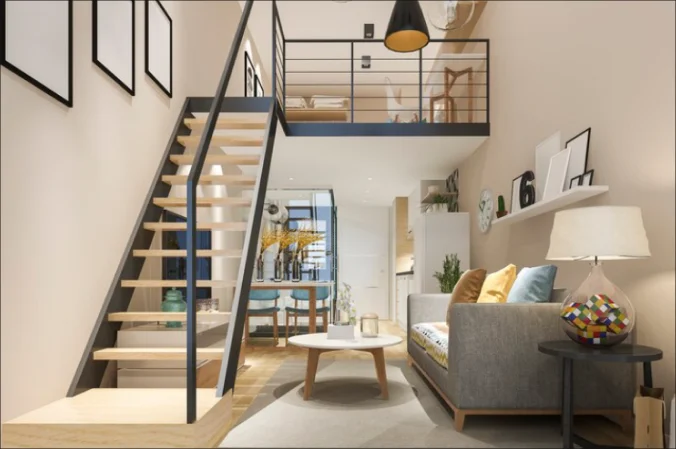
Stairs are seen as energy pathways throughout the house. Avoid having the staircase directly facing the front door. This is applicable even to a lobby in a skyscraper office, not just a living space. If it does, place a mirror at the bottom to prevent energy from escaping your home. Hang some artwork on the staircase walls to slow down and guide the flow of energy.
The Bagua Map in Feng Shui House Layout
The Bagua Map consists of nine sections, each representing a specific theme or aspect of life, helping you balance the Qi energy in your home. Wondering how to incorporate the Bagua Map rules into your interior design?
First of all, use a compass to determine the north orientation of your home. Make sure your floor plan and Feng Shui house layout match Bagua Map according to the sides of the world. Identify the parts of your home that fall into each Bagua Map sector. Then incorporate the corresponding colors and symbols into each area. Here is an explanation of each sector with examples:
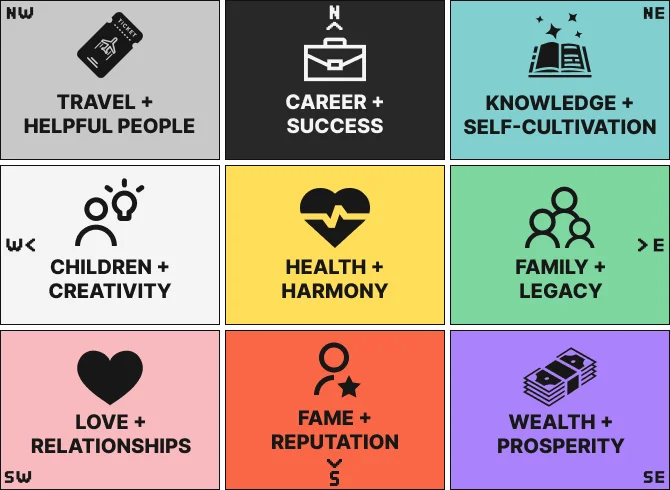
Here are the energy sectors of the Bagua Map
1. Career and Success
The main symbol of this sector is your professional life. Consider placing your home office or main entrance here to enhance it.
Symbols – An aquarium, pictures with waves, or mirrors
Location – North
Element – Water
Color – Black, dark blue
2. Knowledge and Self-Cultivation
Pursuing knowledge, wisdom, and intellectual growth? For the best Feng Shui, you can place a study room, library, or learning space here to attract beneficial energy.
Symbols – Books, a study desk, or a vision board
Location – Northeast
Element – Earth
Color – Blue, green, black
3. Family and Legacy
This area relates to family ties and the overall energy of the household. Living and dining rooms where families come together are ideal for placement in this sector.
Symbols – Plants or images of family
Location – East
Element – Wood
Color – Green
4. Wealth and Prosperity
Want to attract financial stability and material belongings to your life? Consider placing your main entrance or an area for financial activities so the needed energy enters.
Symbols – A money plant or a bowl of coins
Location – Southeast
Element – Wood
Color – Purple, blue, red
5. Fame and Reputation
This sector is all about reputation, recognition, and public perception. A home theater, a creative studio, or any other area that helps you showcase your talents is welcome here.
Symbols – Candles, a fireplace, a lighthouse figurine, awards, or bright lights
Location – South
Element – Fire
Color – Red, orange
6. Love and Relationships
The symbols of this area are love, marriage, and partnership. Placing the master bedroom or any space that promotes harmony and connection here can boost relationship energy.
Symbols – Pairs of any objects
Location – Southwest
Element – Metal
Color – Pink, red, white
7. Children and Creativity
This area represents artistic expression and fertility. It's ideal for a child's bedroom, playroom, or art studio to foster an environment that is conducive to these aspects.
Symbols – Artwork, pottery, musical instruments, or creative tools
Location – West
Element – Earth
Color – White
8. Travel and Helpful People
Need some support from others or more travel opportunities in your life? Set up a guest room or a networking space in this area to attract helpful people into your life.
Symbols – Globes, maps, travel souvenirs, or images of mentors
Location – Northwest
Element – Metal
Color – White, gray
9. Health and Harmony
This is the center of both physical and emotional well-being. Keeping this area open and free of clutter can enhance the flow of positive Qi energy throughout the entire home.
Symbols – A chandelier or a round rug
Location – Center
Element – Earth
Color – Yellow, brown
How to Feng Shui Your Home Step by Step?
We have provided you with all the basic rules necessary to start integrating feng shui into your interior design. Now, to follow them without trouble and avoid unnecessary costs, we suggest that you visualize your Feng Shui house plans.
There's no need to use complicated modeling software or read detailed manuals. Just try InteriorBox 3D, a handy program with built-in furniture collections and 2D & 3D viewing modes. Whether you want your space to meet the Feng Shui, Yin and Yang, or Wuxing (Chinese philosophy) principles, it’ll help you do it with ease. Here's a quick guide on how to create your perfect interior:
Step 1. Create Your House Plan
Run the Feng Shui interior design software and click New Project. You can import your home's floor plan to use as a base or design your home layout from scratch. Start adding walls with the Draw a Room tool. Then you can add doors, windows, partitions, and other objects like a porch or dormer windows.
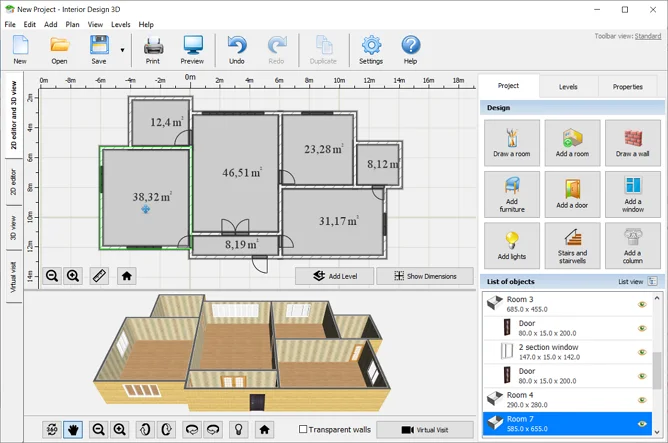
Draw the plan of your house using the tools on the Projects tab
Step 2. Fill Your Project with Furniture Items
Fill your rooms with housewares using the Add Furniture tool. Pay special attention to the placement of the items. Next, choose the materials for the walls and floors according to Feng Shui rules and your taste. You can do this as well as change the color & size in the Properties tab. You just need to select a room or furniture item on the 2D plan.
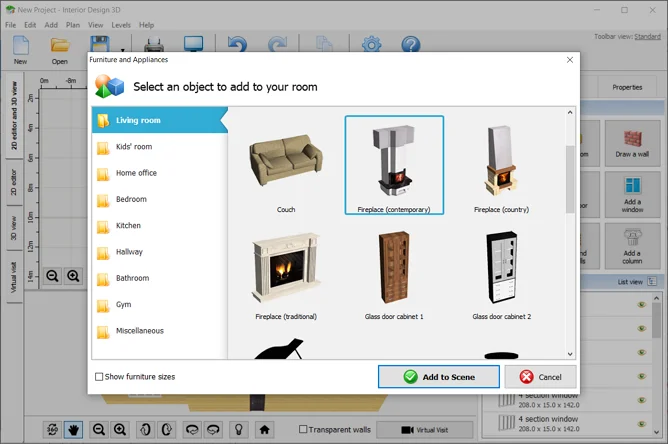
Decorate your home according to Feng Shui and Bagua Map rules
Step 3. Print Your Feng Shui Floor Plan
Once you've completed your house plan, you can use the built-in printing module to print the blueprint and 3D model. Simply select your printer from the drop-down list, choose the paper size and orientation, and make any necessary margin adjustments. Alternatively, you can save your project to continue your Feng Shui building later.
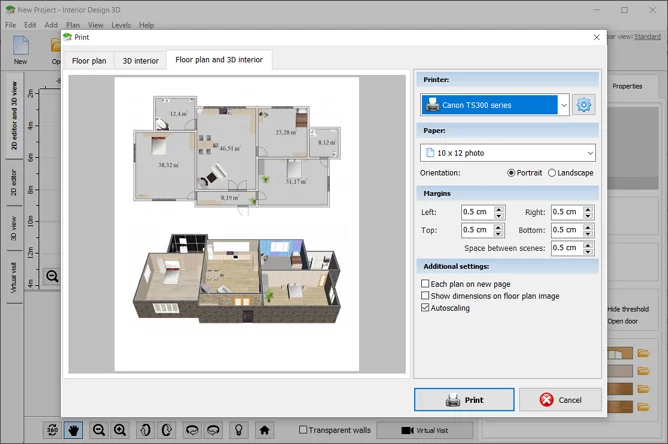
Check the box next to Show Dimensions to print with measurements
With ease and precision, you can now create your perfect Feng Shui house & furniture layout, avoiding expensive errors and realizing your creative vision. With InteriorBox 3D, the process will be effortless and efficient, regardless of your skills. Take advantage of the program's trial version to see it in action and generate house plans for free. We wish you all the best in your improved home environment.
FAQ
How to declutter your space?
Decluttering your space is an important step when you’re organizing your space according to Feng Shi. You need to avoid turning your home into a landfill of unwanted items. Regularly remove unnecessary objects from the entrance, bedrooms, and kitchen – the order is crucial, too. Also, make sure you use correct proportions. For example, there should be maximum 15% visible storage or surface coverage in living areas. If there’s clutter density at more than 25%, energy blockage occurs in your space. Finally, your entrance foyers require <10% obstruction so that "mouth of chi" promotes prosperity energy intake.
How to arrange your home according to Feng Shui?
It’s essential to balance the main elements correctly. They include Earth 30% (stability foundation), Wood 20% (growth energy), Water 20% (wisdom flow), Metal 15% (clarity focus), Fire 15% (passion activation). It’s not recommended to change the distribution rates as it may affect the energy of your home. For instance, Fire-Water element conflict creates a destructive energy cycle that affects household health and finances.
So what do they look like in real life? Each element has specific attributes. The Wood element can be implemented in your home via green/brown colors, columnar shapes, and wood furniture. With red/orange/purple colors, triangle shape, and candles/lighting, you can promote the Fire element. Earth is normally represented by yellow/beige/brown, square or rectangle shapes, and ceramics/stones. You should also implement the Metal element by using white/gray/metallic color, round shapes, and metal objects/mirrors. Plus, it’s considered bad if your Feng Shui house layout does not include blue/black color, flowing shapes, fountains/aquariums which represent element Water.
Which direction should your bed face?
The best feng shui position for your bed is facing south in a commanding position and away from the doors.
What is the difference between Feng Shui and Vastu Shastra?
First of all, they differ in origin: Feng Shui originated from China, while Vastu Shastra is an Indian philosophy. Feng Shui is widely used for adjusting energy in existing homes with the help of objects and decor. Meanwhile, Vastu Shastra is more suitable for building new homes as it covers some architecture aspects. When studying these practices, you might also see some differences in terms of symmetry. For example, it’s emphasized in Indian philosophy. Feng Shui on the contrary focuses on balance, often embracing asymmetry rather than strict symmetry.